
IT environments have evolved. The way IT teams work hasn’t always kept pace.
Based on our research, 80% of IT professionals say their roles are shifting from operator to orchestrator, yet only 30% feel extremely prepared for that change. Within the same organizations, 47% of C-suite respondents feel prepared, compared with just 13% of front-line IT professionals. Yet day-to-day operations can still look like this:
An alert fires. Someone checks a dashboard. Then another. Logs get searched, context gets pulled from different systems, another team gets involved, and eventually someone pieces together enough of the story to decide what to do next.
AI is already helping to change that. It can surface anomalies, reveal patterns, summarize information, and recommend next steps.
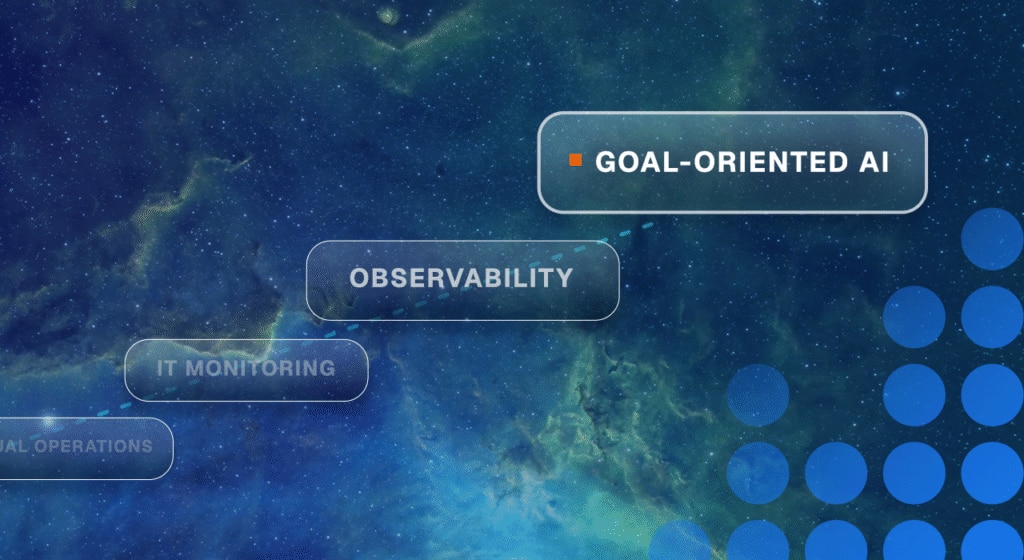
At SolarWinds, AI is evolving how work gets done, from understanding what’s happening to deciding what to do to directing AI toward the outcome you want.
Stage 1: Diagnostic AI – See what matters
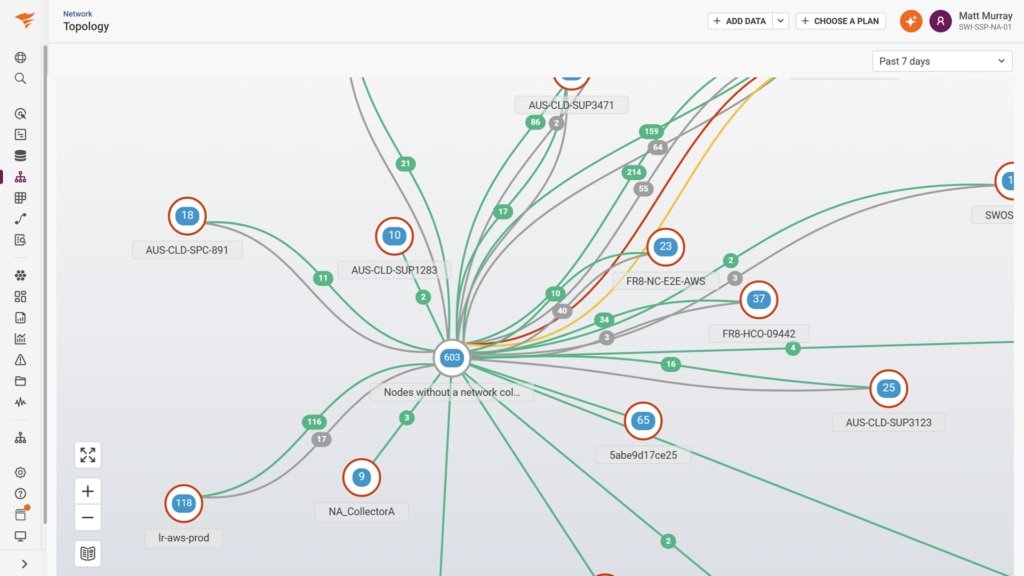
Use AI for observability to cut through the noise
For many IT teams, AI in IT operations starts by helping teams make sense of a noisy, complex environment. When AI is grounded in observability data and operational context, it can help surface what deserves attention, identify patterns, and bring the most relevant signals into view instead of expecting people to manually work through every alert, event, metric, and dependency. The goal isn’t to remove people from the process. It’s to give them a better starting point.
For an IT manager, it is designed to mean spending less time figuring out where to look first.
For an IT leader, it can mean greater visibility into emerging risks, dependencies, and areas where operational complexity is putting pressure on the team.
The shift looks something like this:
From: Here is everything that happened.
To: Here is what matters and where you should focus.
That reflects a diagnostic AI approach where AI surfaces the signals and patterns that matter, while the team interprets the insight and decides what happens next.
Ask yourself:
If an incident started right now, how much time would your team spend finding the relevant information before they could start solving the problem?
If the answer involves several dashboards, searches, tools, and handoffs, improving how quickly your team can get to the right signal may be one of the most useful places to start.
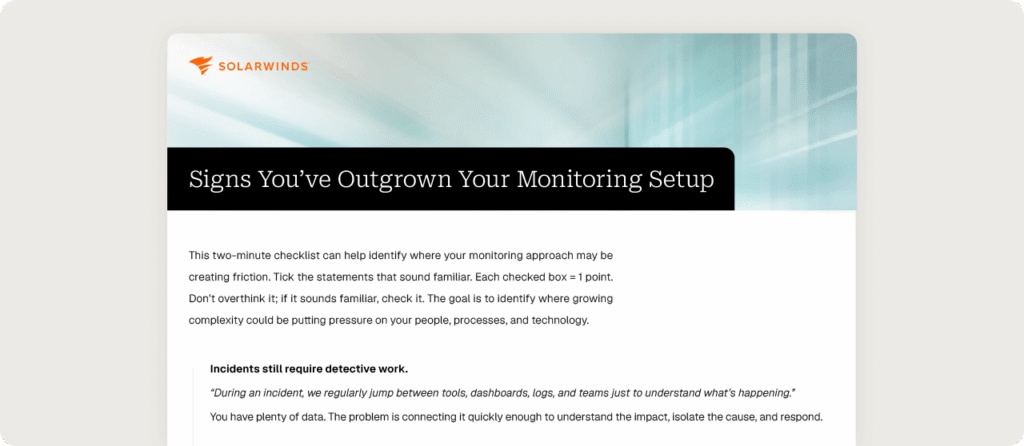
10 signs you may have outgroOwn your monitoring setup
See where alert noise, tool sprawl, manual investigation, and disconnected context may be adding friction to your day.
Get the Guide
Step 2 – Assistive AI- Decide with Confidence
Bring AI further into the investigation
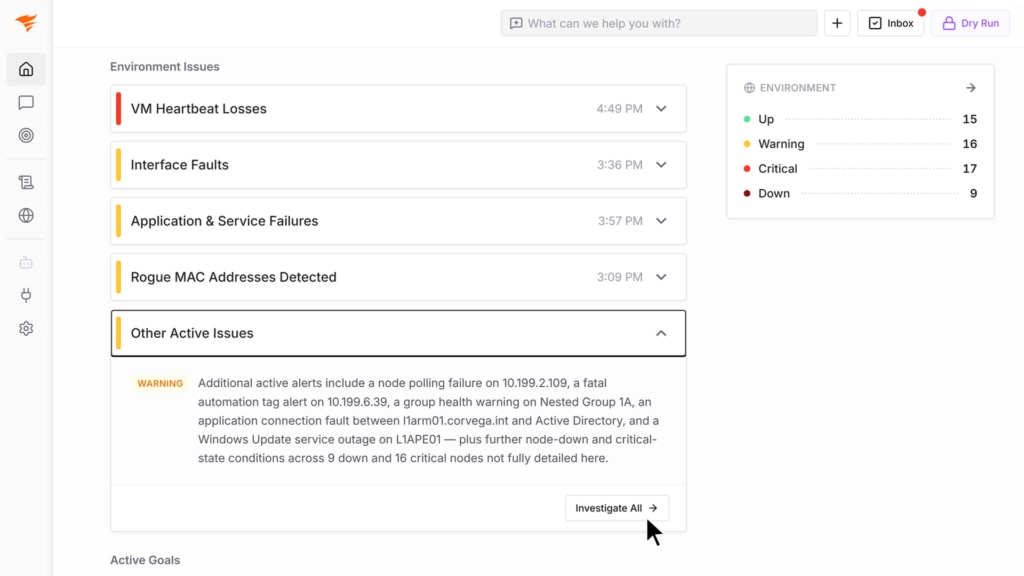
Finding the right signal faster helps. But someone still needs to understand what it means. This is where assistive AI goes further. With the right observability context, AI can help gather evidence, review history, test hypotheses, and recommend what to investigate or do next.
Your team still directs the work and makes the decisions. The difference is that people spend less time manually assembling the evidence needed to reach those decisions.
For example, AI could help an engineer understand:
- What changed before the issue appeared
- Which systems or dependencies may be involved
- Whether similar behavior has occurred before
- What the available evidence suggests they should check next
The objective isn’t an AI-generated answer for its own sake. It’s a better-supported decision, reached faster.
For IT managers, that can mean less tool-switching, less manual correlation, and fewer repetitive investigative steps.
For IT leaders, it can mean helping existing teams handle growing complexity more consistently without simply adding more process.
Why observability matters at every stage
From diagnostic AI to assistive AI, the quality of the outcome depends on the quality of the operational context behind it. The more you ask AI to help with IT operations, the more important that context becomes. A recommendation is only useful if it is grounded in what is happening across the environment.
That means giving AI access to the right signals, relationships, history, and operational data so it can help teams move from:
The shift looks something like this:
From:
Something is wrong
To:
Here’s what changed, here’s the relevant evidence, and here’s what you should investigate next.
AI shouldn’t just help teams ask questions faster. It should help them reach better-informed decisions faster.
Step 3: Autonomous AI – Direct AI toward outcomes
Many AI interactions still happen one step at a time.
Ask a question. Get an answer.
Request a summary. Get a summary.
Ask what to do next. Get a recommendation.
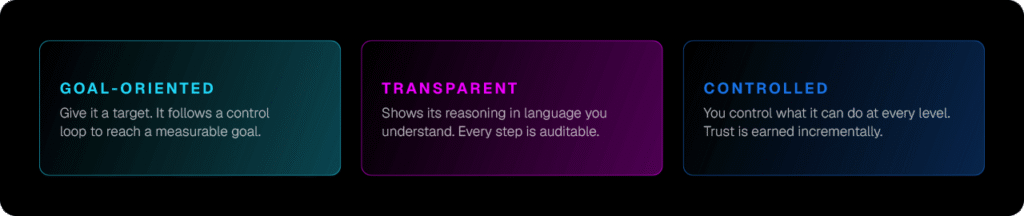
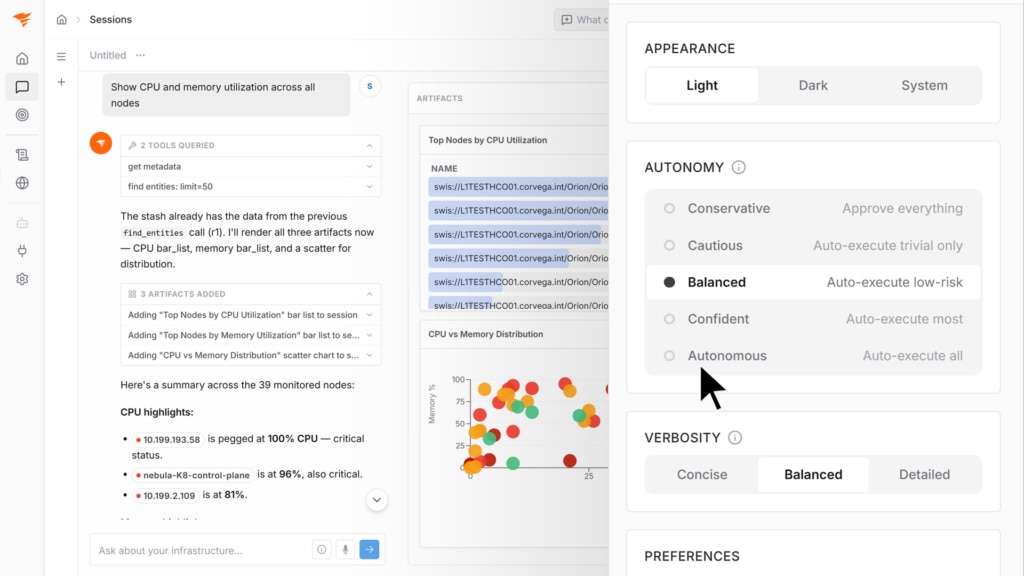
But what happens when you don’t want to direct every individual step? That’s where goal-oriented AI can change the model for autonomous IT operations. Instead of telling AI exactly what to do next, your team defines the desired outcome, the boundaries AI must operate within, and where human approval is required.
Goal-oriented AI can then coordinate more of the work required to get there — gathering evidence, using permitted tools and data, taking approved actions, checking the result, and adapting what happens next. In an observability environment, that means AI can work from relevant operational signals, dependencies, history, and evidence rather than acting on an isolated alert or request.
People remain responsible for priorities, judgment, and risk. Your team determines what AI is allowed to do, what requires approval, and where human review remains essential.
The shift looks something like this:
From: Tell the AI what to do next.
To: Define the outcome and govern how AI works toward it.
What could that look like in IT operations?
The best place to start is with an operational problem where the desired outcome is clear enough to assess.
For example:
- Reduce alert noise: Bring related signals and context together so teams can spend less time separating useful information from noise.
- Accelerate incident investigation and root cause analysis: Assemble relevant evidence from supported systems and reduce the manual effort required to move from an initial signal to a useful explanation.
- Support governed remediation and automation: Use operational context and policies to recommend next steps and coordinate governed AI actions, with human approval where required.
- Create clearer operational evidence: Capturing findings, actions, approvals, and progress so teams can understand what happened, what changed, and why.
The goal isn’t autonomy everywhere. It’s choosing the right level of autonomy for the work, the risk, and the outcome.
What does evolving IT operations with AI mean for your team?
The value looks different depending on where you sit.
For IT leaders
Moving from insight toward governed action can create additional operational capacity without simply adding more tools, processes, or headcount. AI can take on more repeatable work while leaders retain governance over what it can do, where approval is required, and how progress is assessed. The opportunity is a greater capacity and consistency without giving up control.
For IT Practitioner
It can mean less time gathering context, repeating investigative steps, and manually coordinating every part of a workflow. AI can handle more of the repetitive work, allowing managers to spend more time applying their expertise to the operational problem itself.
Evolve at the pace that makes sense for you
Evolving IT operations with AI doesn’t require flipping a switch from manual operations to autonomy. One workflow may only need diagnostic AI to identify the right signals. Another may benefit from assistive AI during an investigation. A well-defined, lower-risk process may be a stronger candidate for autonomous, goal-oriented AI to coordinate more of the work.
Ask:
- What outcome are we trying to improve?
- What context does the team need to get there?
- What work could AI take on?
- Where should people remain in control?
- How will we know whether the outcome improved?
That gives teams a much more practical starting point than asking, “Where can we add AI?”
From AI that informs to AI that works toward outcomes
SolarWinds® Avior™ brings goal-oriented AI to IT operations.
You define the outcome and the guardrails. Avior can gather evidence, take permitted action, check the result, and continue working toward the goal — while your team controls what can proceed, what requires approval, and when Avior needs input.
The bigger shift isn’t from people to AI. It’s from teams spending their time directing every individual step to being able to spend more time directing the outcome.
See how AI can help extend operational capacity, improve decision-making, accelerate investigation, and move work forward while you stay in control