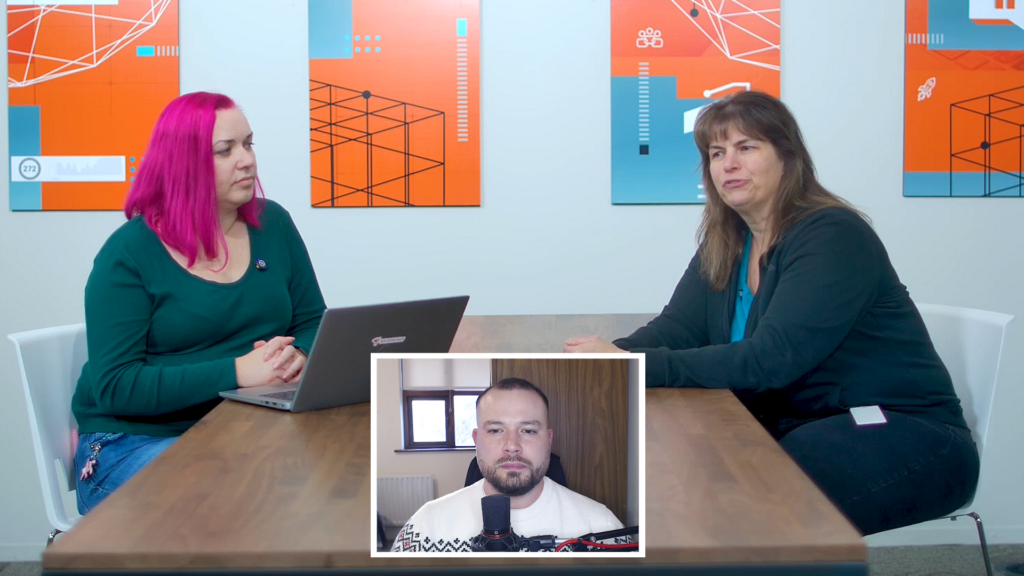
In this SolarWinds TechPod episode, hosts Chrystal Taylor and Sean Sebring talk with Cheryl Nomanson, a SolarWinds Academy trainer with 14 years at the company. They discuss the importance of technical education for complex software and networks, exploring SolarWinds’ comprehensive training offerings including the SolarWinds Academy with its on-demand courses, instructor-led virtual classes, and office hours format. Cheryl explains the SolarWinds Certified Professional (SCP) certification program and the newer SolarWinds Certified Instructor (SCI) program for training partners globally. The conversation covers different learning formats, comparing virtual versus in-person instruction challenges and benefits, the importance of customer feedback in developing training content, and best practices for internal employee education. They emphasize how proper training helps customers realize the full value of SolarWinds products by providing not just functional knowledge but strategic understanding of why features work the way they do.
RELATED LINKS:
Chrystal Taylor:
Welcome to SolarWinds TechPod, I’m your host Chrystal Taylor. And with me as always is my co-host Sean Sebring. Today we have a very special guest with us, Cheryl Nomanson. She’s a academy trainer and she’s been with SolarWinds for a long time, teaching a lot of people a lot of things. So we’re going to dive into the topic of tech education today, and talk a little bit about what SolarWinds has to offer our customers, but also just kind of in general how we feel about tech education. So Cheryl, can you tell us a little bit about yourself?
Cheryl Nomanson:
Yeah, so I’ve been with SolarWinds for 14 years. I’ve been a technical trainer for about longer than that, I’d say 20. And I train customers and I train partners for SolarWinds and I also train a lot of internal audiences of varying tech levels and knowledge.
Chrystal Taylor:
So you’d say that you’re probably a smart cookie?
Cheryl Nomanson:
It’s been said about me, yes.
Chrystal Taylor:
You know a thing or two about SolarWinds and products and the technology, and kind of how people use it and all of that.
Cheryl Nomanson:
Yes. And traveling and teaching partners globally has shown me a lot of different ways that people use it, and the different things that are important to customers sometimes just based on their regions and their locations and the infrastructures that they have.
Chrystal Taylor:
Yeah. Fun story. I first met Cheryl when she was giving a training and I was working at a partner, so I got to know Cheryl before I came to SolarWinds, and I have been the subject of the student learning from Cheryl at times. So that’s when, this is going to haunt me, we’ve known each other while.
Cheryl Nomanson:
It’s been a minute.
Chrystal Taylor:
So let’s start with a broad question about the importance of education. And I know that obviously you think it’s important because it’s your career. So how do you feel about tech education in particular for learning different types of software?
Cheryl Nomanson:
I think it’s really important because networks have grown so much in complexity. And that the software, to be honest, has to grow complexity as well in order to meet those networks. And so you try to make software as easy it is to use, but the nature of the network and what’s being monitored can be complex. And so the software by nature has a little bit of complexity to it.
And I think that customers and users learn the software better if they get someone that can give them best practice, and that can give them, hey, this is how this feature is intended to be used and here’s the best way to use it. And instead of trying to stumble your way through it, because I never read manuals when I was an admin, who does? Nobody reads a manual. So instead of trying to just kind of stumble your way through it, you have some kind of guardrails and guidelines on how to use it.
Sean Sebring:
So one thing that I kind of heard for myself in there was, in addition to the how is the why, the why behind it. Because you said fumbling through the software trying to figure out what buttons do what, why would this button do what it does, for what purpose does it serve, right? Because as the network grows in complexity, the software does. Okay, well why? Why? So when you’re learning something, obviously you need to learn what to pass a test, but the why is something that’s super important for it to be a retained piece of knowledge, I think. If you know why something does what it does, not just what it does.
Cheryl Nomanson:
Yeah, I’d say that’s true. And for example, in SolarWinds on the topic of alerts, I mean you can go through and use the alert wizard. You can probably learn how to functionally use the alert wizard in half an hour. I’ll take three hours to teach somebody how to build alerts. And the reason why is because it’s not just how do you structurally build it, but how do you build something smart and optimized that’s actually going to be useful in the end. So I think that’s where the training comes in. It’s like you can figure out how to use a wizard, but how do I use it smartly and how do I build something that’s going to be really useful?
Chrystal Taylor:
Right. As we mentioned, we have admin guides that instructionalize all of how to use the software functionally, but what does, we’ve mentioned academy a few times, so tell us broadly what is the SolarWinds Academy?
Cheryl Nomanson:
So the SolarWinds Academy is designed to help customers and partners learn how to utilize our software to use it to learn the new things when they come out. And ultimately we do have a pretty broad certification process too. So if people want to become a SolarWinds certified professional, the academy courses will help you ramp up for that exam as well. So there’s a lot of moving pieces to it. But really ultimately it’s this is our software, these are all the cool things that our software does. Let us show you how to best use those features efficiently.
Chrystal Taylor:
Well, and to that end, I know that different formats of learning work for different people. And I know also that the academy does a lot of different things. So we’re talking about education kind of broadly. But tell me about some of the things that you have there. Because I know that you could be, because I talk to you a lot, you do things like office hours which are open-ended and people can come and ask questions that they have rather than sitting down for a training video. But we do also have training videos and that kind of stuff. So talk a little bit about, A, what types of formats that we provide and why we do that.
Cheryl Nomanson:
Sure. So we provide a very large library of on-demand courses. And those can be accessed through the customer portal, and you can access those courses and take them in kind of a consumable format. So it’ll be a large class, for example, on SolarWinds Observability self-hosted fundamentals. Okay. You have reports, you have alerts, you have users, you have notes. You have all these different topics so that they’re broken out into these consumable formats and on-demand videos. That way people can jump in and learn about something when they need to learn about it, or they can fit all of this training into their schedule. Like a good hour here, I’ll do 10 minutes here, or I’ll do 25 minutes here.
Then once a quarter, we take a selection of those classes. Our on-demand library is much larger than we can do instructionally. But we’ll take a selection of those courses and we’ll deliver them in structural ways. And what a lot of customers do is maybe they’ve gone through the videos, and they’ve learned how to build a custom property, but they want to talk, have a sounding board, they want to talk to an instructor. Or what happens when I teach these courses a lot of times is people start talking to each other and they start giving recommendations. They want a little bit of interaction.
Those are typically longer classes. They take a little bit of time commitment. They can be three or four hours long, so sometimes people can’t allocate that time. So that’s where the on-demand courses become useful. Then as you mentioned, we have office hours, which is basically an open forum with one of our academy instructors, and you can pick the instructor based on what their specialties are. We have people that are really good with the networking side of observability and people with the SaaS side and people with the application side.
And so you can choose the instructor that best matches your questions and needs, and you go in there and you just have a conversation. I typically open up my line and let everybody talk to each other if they want to, and we all figure out, it’s like, okay, what’s your question? I usually recommend that people have at least taken training courses before they come into office hours. Because it is a one hour forum. I can’t teach you the whole topic and then help you. It’s like, go do your homework, so to speak, and learn how to build this thing, and then let me help you figure out how to best apply that in your particular or unique situation.
Sean Sebring:
No, it’s a great gap fill between the two. I’m personally terrible with on-demand training videos because then you leave it to me to decide, and I’m like, oh, I have so many other things I could do as well. So I imagine I know the answer to this, there is no best option. It’s whatever works best for the person, or everyone’s different kind of thing.
I am curious though, something that I’m not sure of is do you think getting a certification motivates drives or increases the success or rate or level of education that people receive? Having that extra little carrot at the end of the stick so to speak, or something at the finish line, something that they receive? How do you think that benefits in training?
Cheryl Nomanson:
Well, I think it shows that they’ve learned or that they know how to do these things. I think you can put our certification with just a Cisco or Microsoft or any of the others. It’s why would you go get that cert, or why would you get this cert? It looks good on a CV. It helps you move your career forward, and it just basically demonstrates or proves that you can actually do the things that you say that you do with that product.
Our exams, they’re as practical as we can make them. They’re practical application or knowledge. And when people ask me what the SCP is, I typically tell them, I’m like, “Look, when you get certified, what we’re saying, like for example, if you get the observability fundamentals, we’re saying that you can go out, deploy the software, set it up, do the configurations to get up and running in that environment, do some basic troubleshooting. And at the end of the day, you’ve got a functional software that’s optimized and that’s running according to best practice, and it’s going to best fit that network.” That’s really what we’re saying with our certifications. And I think you could probably put in with the other professional certifications as to why people would go and get certified.
Chrystal Taylor:
Just like any other certification, it’s sort of inspires confidence in your abilities on the other end of things. So if I’m looking at a bunch of CVs for a SolarWinds administrator, and I see one that has SCP certification, that might bump them up the list like a Cisco certification would for networking.
Cheryl Nomanson:
Yes, I’d say that’s true.
Chrystal Taylor:
Well talk to me about why we do what we do. Because this training that you guys do is free for our customers, and it’s included as part of the deal. So talk to me about why you, Cheryl, do what you do.
Cheryl Nomanson:
How do I do what I do? So tech is my second career. My first career, I was actually a large animal vet tech, and I’ve talked about, and some customers are like, how did you even get into technology from that particular field? And it is quite a joke.
But I’ve always been very good at understanding how computers work, kind of an engineering mind. My father was an engineer. I kind of have the same kind of mind. And what I found was that I kind of fit in this position where I could talk to and understand a product person, a developer, an engineer who maybe isn’t able to communicate their message effectively to less technical people. And so less technical or different technical, meaning that they’re an engineer, this is a sysadmin or they’re an engineer, and this is just a run-of-the-mill user. There’s a gap there sometimes between this person knowing what they know and being able to convey that.
And that’s what training’s all about, is having the knowledge, being somewhat of a subject matter expert, but then being able to convey that to someone. Because all that knowledge in the world doesn’t do anybody any good if you can’t get it out of your head and communicate it to people. So what I found was kind of a niche is that I could talk to this audience and I could talk to this audience. I’m like, oh, I fit right here.
And it’s one of the reasons why I actually got into technology. So I was a natural fit for training because then I can say, I learned this, I understand this. Now I can convey this to other people so that they have the knowledge and they can actually use these really cool features that these engineers came up with.
Chrystal Taylor:
That bridge.
Cheryl Nomanson:
Yes, I’d say that’s probably true. And that’s why I did it. And I enjoy that. I enjoy seeing people’s faces light up like the light bulb moment where they’re like, oh my gosh, that is so cool, and now I know how to use it.
Sean Sebring:
A cool opportunity for me that comes up with, it could be virtual classrooms, definitely in office hours, which I really enjoy office hours for things I’m passionate about, is kind of a continuing education aspect of it. And it’s definitely true for an standardized virtual class or on-demand training video it’s best practices. You could have a wizard who understands the tool, the platform, the application, but having an opportunity, best practices are not necessarily universal. And there’s cool unique things you can learn from other people. And there’s just insights that might’ve evolved or developed in the last three months even.
So there are great opportunities to visit these things. Even just to sit, if the majority of it is just reassuring your own knowledge and education, and then you hear that one nugget or gem of wisdom, you’re like, oh, I never thought of it that way. I think it’s a great way to look at education is just best practices. Doesn’t mean what they were yesterday, it could be what they are today. It’s just completely different. So best practices, I think, is a really neat way to look at you were the best. Office hours, again, to me are a cool opportunity to say what’s someone else’s best today that I never knew about before?
Cheryl Nomanson:
I would agree with that. And I learn new best practices and new cool ways to use our features from our customers. All features I think benefit from having a best practice recommendations on how best to use them, even if it’s just we designed the software, this is probably the best way to do it. But also things like custom properties. I mean, I’ve constantly learned new really cool use cases on how to use custom properties from our customers. So I’ll have customers in courses or in training events that’ll say, “This is what I did,” and I’m like, “That’s really cool.” And they’re like, “Can I use that?” And then we go forth and we use that. I’ll use that again as a new best practice. Here’s another way that our customers are using this very cool feature.
Sean Sebring:
So Cheryl, we’ve talked a good bit about some of the SolarWinds trainings. We actually have the official title for what our SolarWinds training program is, I guess you could say. So could you tell us the name of that, and then help define some of the acronyms we’ve used in addressing some of these SolarWinds trainings?
Cheryl Nomanson:
Yeah, so in the training, our certification training is SolarWinds Certified Professional or SCP. And we offer several different exams for that. SolarWinds observability self-hosted alone has five. And if you’re like, why do you have five exams? And I’m like, because that product has integrated fully mature features from 10 different products. So one exam is probably not feasible. So what we’ve done with that is we’ve done fundamentals, which people who have been around SolarWinds for a long time think of as the core features, alerting, reporting views, discoveries, things like that.
Then we have network monitoring and network management. Those would cover the networking side of the products. And then we also have infrastructure monitoring and infrastructure. So network side would be features from legacy modules like NPM, NTA, IPAM, UDT, and then the infrastructure side would be for legacy modules like SAM and VMAN and things like that. So we split those into four different distinct exams, three of which are live, and the last two with infrastructure are coming in the very near future. We also do those for security products, we do it for database, and we do it for ITSM also. So we have different exams available for different products and different paths.
Sean Sebring:
One thing I thought was cool is we also have an SCI which is certified instructor, is that correct?
Cheryl Nomanson:
Yes, it is. Yes it is.
Sean Sebring:
That’s a really cool one. So it’s a train the trainer kind of thing.
Cheryl Nomanson:
It is. And we came up with that because it allows us to certify-
Sean Sebring:
We’ll steal Cheryl.
Cheryl Nomanson:
I guess. Yeah. It allows us to certify instructors. And we’d even seen it on THWACK, where we’ve seen a lot of, “Hey, I built this manual for taking this exam or that exam for SolarWinds.” Myself, I know a few times I’ve come in and said, “Hey, we don’t officially endorse this, we don’t know this content.” In other words, kind of a very diplomatic buyer beware kind of message for it.
So what we did with the SCI is we do a two and a half day event in person where we teach people how to be good instructors. Tech is notorious for mistaking someone as a subject matter expert as automatically being a good trainer. And that comes back to what we were talking about about bridging that gap between the technical person and the audience. So training itself and instructing is its own skillset, and not all subject matter experts have it.
So what I like to say is that we are creating subject matter expert instructors. In other words, they know how to use a product. Because you have to be an SCP for that product in order to be an SCI. They know the product itself, but they also know the best ways to instruct that to people effectively. So we’ve launched that program pretty recently. It’s been very, very popular. So we’re scaling that out. It also allows us to move areas where maybe it’s a challenge to be an instructor in English. And so we can train maybe partners in those areas that speak Portuguese or they speak Spanish or they speak another language, and then they can go forth as a certified instructor and instruct in the first language.
And so what we’re saying with the SCI is like this is our endorsement for trainers. There’s a bunch of stuff floating around out there that these people here we endorse as trainers. If you go to an event that they conduct for an SCP certification, they’re using our materials because we share the SCP materials with them, we share all of our stuff with them. So when they do a training for an SCP, the people that are sitting that are getting the information they need to go to certification or even just to be useful with products.
Chrystal Taylor:
So it’s like a SolarWinds stamp of approval on the instructor.
Cheryl Nomanson:
Yes, that’s exactly right.
Chrystal Taylor:
We’ve talked a lot about a lot of programs, and I know that you help develop those programs, along with other academy trainers and other internal folks. So can you tell us a little bit about what goes into creating these programs and these exams specifically? Because that is a challenge and they have been revamped several times. Anyone who’s been around for a while know the SCP is not new. It’s changed now, but it’s not new. So talk to us a little bit about what goes into creating these things.
Cheryl Nomanson:
Sure. So the instructors on the academy that are putting together these exams, myself included, and our other academy instructors, are all experienced with using the software. A lot of them like me have an admin background. I have a sysadmin background. So we understand the perspective of the person using it. And SolarWinds has a long, very cool history of using the software. They cater to the person that has to actually to use it.
So what we do is we evaluate, we work very closely with product and the product market or product managers, and we evaluate the features that are essential for really using that product well. If you’re going to learn how to use observability network monitoring, we’re going to teach you how to build pollers, we’re going to teach you how to effectively monitor flow. These are key and core pieces.
But then as the software evolves, we bring in new things. For example, we brought in anomaly-based alerting. That’s huge for the alerting engine. So we will go back periodically and evaluate the releases, take out things that have been deprecated, like Network Atlas and stuff like that, that we have deprecated as a feature. And then we will add in things like anomaly-based alerting.
So we move the software forward. We evaluate that based on our knowledge as academy trainers, feedback from customers as we teach them as to what things are really useful to them, and what makes the product really useful in an environment, what makes the product what it is. And we also work with the product managers so that we’re aligned with the company, and we’re aligned with where the software’s going and we know where something is coming from so that we can make sure that we integrate that into the exam.
Chrystal Taylor:
So these programs aren’t just us saying this is how best to use our products and this is what we think you should do. You’re using real customer feedback and how they really use the products in order to define what we teach and what we’re caring about as far as the certifications go, things like that.
Cheryl Nomanson:
Yes, absolutely. Not just us from what we get from class, but that’s also a key part of how product management develops features and integrates them as the software is user feedback. So from top to bottom, what we have in our classes and what we have in our tests, A, is a result of customer feedback. And then because of that, it is constantly evolving. As we’ve already discussed, customers come up with new ways that we integrate into best practices.
Sean Sebring:
So Cheryl, I have a random thing to ask about instruction education like this. What are your thoughts on internal training with the kind of training that you do? Do you see value benefit? How much overhead would it take? Because I mean you already just kind of described, there’s a lot of work that goes into it. But what are your thoughts on internal educating and the idea of an internal educating, I don’t know, department staff for training? Because as you’ve mentioned, these products are pretty complex in the way they work. And it could be outside of just those, maybe it’s an onboarding kind of thing. So when it comes to just education in general, can you give some thoughts on what organizations could do to leverage education better to improve the employee experience?
Cheryl Nomanson:
Yeah, I think that it is equally important to educate our internal staff, particularly in some departments that are more technical like support or product, or any, even sales engineering and sales. I’ve always believed that a software salesperson is probably a little bit more effective if they know a little bit about the product, what the product does. If they can answer the five most common basic questions, they build legitimacy with the person that they’re working with.
So I think there’s a lot of value to internal training. I think sometimes, for example, in support, there’s a very, and rightly so, a very heavy concentration on when this breaks, you do this, when this breaks, you do this, that kind of a thing. But sometimes not enough of an emphasis on this is a feature that works really well, here’s how it works, and here’s why we developed it.
Because support can be something that can help take that message to customers. And I’m speaking broadly in a lot of different tech companies, these are the kind of pitfalls that you fall into because you’re very busy. We need to get you doing this, we need to get you doing this. And there’s not a more broad education. So I think internal training, I treat internal product training, especially if it’s a technical audience, exactly the way that I would train a customer or a partner. Because they need to have the same knowledge. So I think it is equally as important that your internal people have the same understanding of product and feature as you are giving to your customers and partners.
Sean Sebring:
I 100% agree. Chrystal and I talk about education stuff constantly, and this isn’t specific to SolarWinds, how we currently operate. But yeah, I just wanted your general take on it as an instructor because I think it’s super important. Especially as a person who, as I’d mentioned, I kind of struggle with on-demand stuff. So if you hand me a list of videos to say, “Well, here’s your new role, go learn this,” I might have a harder time than if you sat down with me on a curriculum and we walked through some stuff together. But Chrystal, any thoughts to add to this?
Chrystal Taylor:
Yeah, I mean from experience, I think the challenges that come with providing an in-person or live training internally is that people don’t want to take their employees off the teams. And so it’s not off of their whatever they’re supposed to be doing. So what advice, I guess, would you have for anyone who’s trying to get time allotments for doing some training to improve their job. Do you have any advice for them on how they can get that justification to their management or their leaders, or even in their own, not necessarily us, but in their own internal training, whatever options that they have to make those justifications?
Cheryl Nomanson:
So that’s a long-term hack. But some of it to me is, and sometimes by the very nature of a particular job, you don’t look at the long game, you look at today or tomorrow or the next quarter. But overall, I think especially when you first bring someone on, you’re making an investment into an employee. So by that nature alone, you want them to be successful. You want them to be successful because you want them to succeed because you’re a human being, but also there’s the cost side of it. You have hired someone, you need them to succeed.
It is better, I think, to give them that time in the beginning to set a good foundation going forward. Because in the long run, I think you have somebody that’s more useful and better at the job. Now what that foundation is does depend on their role. Someone that you’re hiring into sales doesn’t have to have the technical depth that someone that you do support does.
But I think it’s equally important on the technical side, because I’ve actually done support and I’ve been in that model where they throw you in and you have to learn as you go. And what happens is you end up with a very uneven knowledge set. Like you know a whole bunch about one thing because you had to fix it at one point, and you know nothing about this thing because you’ve never had to deal with it. And I think that an employee, regardless of their role, benefits greatly by having a more even knowledge set. They may not be an expert on all of those pillars yet, but they at least have some knowledge of all of it. And that’s how I would justify it is, from a business standpoint, you are creating a more effective employee by giving them time in the beginning to learn whatever it is that they need to learn and then go forth and use it.
Sean Sebring:
Protecting the investment.
Cheryl Nomanson:
Yeah, it is. It’s also making an employee that’s more successful. And I think there’s a lot that comes with that as well. When employees succeed, they’re happier in their job, they stay, they perform better. There’s the humanitarian side of it, but there’s also the business case, and both of them will apply.
Chrystal Taylor:
Well, we talked about it a few times, and Sean mentioned it as him not doing well with on-demand things. There are multiple ways to format learning for a person, a student who is trying to learn something. In the current world that we’re in now, a lot of options that are provided to people are usually remote or just on-demand videos.
And you do live in-person classes, but you also do live virtual classes, or you have the on-demand virtual classes. So talk to me about learning in its different formats. Do you get something different out of it both as a student [inaudible 00:28:17], do your students get different things out of it? And also do you, as an instructor, get different interactions out of it between doing it in person and doing it virtually?
Cheryl Nomanson:
Tremendously different. And when we do the SCI training, we actually have a segment on that, on the differences between instructing live and instructing virtually. And I think all of us could probably relate to this. If you go back to when the pandemic lockdown started, and you had teachers that had classrooms, and then it basically flipped a switch, and they all had to start teaching these students remotely. And there were a lot of teachers that struggled. And people were scratching their head and saying why, they’d been a teacher for 20 years. Because it literally is that different to teach someone virtually than it is to teach them in person.
Now different people, to speak to your point, Sean, where you’re saying I have a hard time with virtual… I do as well. You sit me down in a room, I do much better. Some people are that way, some people are not. So you get different audiences. Some people do very well at virtual, some people are like, I would love it if you would do this training in person again. Students get very different things out of it. There’s different challenges at keeping students engaged when they’re attending virtually, particularly if there’s no webcams. They’re very disconnected. And you as the instructor, have no idea if they’re following or they’re reading their email.
And as an instructor, I actually draw a lot more energy from my students when I’m teaching them. When I teach virtually, I get more tired teaching the same course virtually than I do teaching it in person because I’m not drawing energy from my students. And so it is the students getting energy and interaction from the instructor, but then the instructor side, it’s also very challenging, I find it to be, to do it virtually as opposed to doing in person. So these are very tremendously different situations to teach in.
Sean Sebring:
I would totally vibe with that just because you can look at people a little different to force them to engage with you, versus on the remote, it’s so easy to hide. And albeit everyone’s different, some people aren’t as outgoing, some people are more shy, but it really does force some engagement. And engagement’s really what you need when you’re going through education and instruction. So as awkward as it could be for some folks, that forced engagement’s good. And also I, if you couldn’t tell, like to be outgoing. So I’m like, ooh, am I right? And I like the acknowledgement that, yeah, you’re right. And so not a teacher’s pet, but at the same time, that’s really helping to reinforce yes, I get it. Yes, I understand it. And yes, maybe I am a teacher’s pet, Chrystal. I don’t know what you were going to say.
Chrystal Taylor:
Oh, I was just going to say that I just remember a few episodes ago you talking about yourself as like a glory chaser. And so all of this, it’s in the same bucket. You want to be acknowledged, you want your-
Sean Sebring:
I do.
Chrystal Taylor:
… [inaudible 00:31:16] right to be acknowledged, and that makes a lot of sense. I was sitting over here thinking about, you mentioned the pandemic and everyone going home and teachers having a hard time with that. But students also had a really hard time with that. I’ve got a 15-year-old, so at the time, he would’ve been 10. And all of those students were put behind by being forcibly moved to a remote learning environment, which neither the teachers nor the students were prepared for it.
But I think one of the critical things that got missed, because I think they’ve mostly caught up by now, at least my son’s caught up by now, but I think one of the most important things that got missed out on is that you lose the kind of social aspects whenever you do that. And I wanted to ask you, because you brought up earlier, you brought up people talking to each other, even in the office hours. So how important do you think the kind of networking and the students talking to other students is in the learning process?
Cheryl Nomanson:
It’s huge in multiple ways because different students have different perspective. And I know when I’ve taught these courses, I’ll have everything from someone who used SolarWinds for 12 years, or however long, to someone who just installed it a month ago. And I always look at the person that’s been there 12 years is in my class. My challenge is at the end of this training that I’ve taught you something. And usually I succeed.
And then so how do you balance that? But the person that has 12 years of experience helps the person that just installed. And not only that, but it validates what the instructors say. If I say, “This is how this feature works, these are the kinds of things you want to avoid doing. These are the kinds of things you want to do.” That guy with the 12 years of experience is like, “Oh yeah, don’t ever do that. Because I’ve done it. It’s very difficult to get out of.” And so you get a certain level of validation. Students like you, Sean, they speak up. I want to know, hey, was I right? But they’ll speak up and they’ll say, “This is how I do it.” All I got to do is ask them. And they’re always ready with an opinion.
But I also find too that they interact more. And when you’re doing these things in person, you get a lot more questions asked I feel. I notice that when I do a lot of virtual training, it’s very quiet. And I think it all has to do with engagement. Like students having a hard time switching to a virtual environment. A lot of that is too because the teachers don’t know how to engage in a virtual way. So there are skills that you can engage your students with that have some success sometimes. But it’s the students learning from each other, and then that just creates this environment of dialogue. And then you [inaudible 00:33:53] by nature and the instructor gets more questions as well. And I think sometimes I honestly think more is learned, my hot take out of it, and in some cases, I think more is learned.
Chrystal Taylor:
Sure. I mean it’s more experiences to color their learning. So I imagine other users, especially if they have more experience, adding their individual stories, and that kind of thing really helps them to grasp the concepts more.
Sean Sebring:
I find that, from the virtual aspect, two things that stand out to me that help me with engagement. Because again, I could still try to be teacher’s pet, raise my hand, offer an opinion in the virtual classroom, but a good way that just makes it fun even when I don’t feel like it is word clouds and emojis, I found. Those are two just simple examples because word clouds are fun because I’m like, I wonder how many other people said this. Now it’s not just, here’s my thought, it’s I wonder how many other people relate to me in this safe environment where I just throw in a word. And then emojis are a safe way to just react without it being literally your reaction. You’re not the one smiling or laughing. It’s throwing in an LOL or whatever. But do you have any other tips and tricks from a virtual instructor perspective on how to try and encourage that engagement?
Cheryl Nomanson:
I like using, if possible, like you said, word clouds. Some kind of almost real-time response. The Slido polls are really good as well. Things like that. I try to get people to use webcams. If you’re on a webcam, you can see other people and they can see you, and it feels more like you’re in a room together. That has hit or miss success. Sometimes people just have bandwidth issues, and they’re not going to turn their camera on, and that’s fair.
The challenge that you run into with virtual training is no matter what kind of tool that you’re using to try to engage, ultimately the student has to elect to play along. If you’re in a classroom, you look at someone and you ask them a question, they feel a bit more on the hook to engage. If it’s virtual, they don’t have to respond, and there’s really nothing that you’re going to do about it. So there’s a certain level where the student also has to be willing to engage.
But those types of just interactive type tools, we do quizzes, things like that. I don’t ask open-ended questions. I try to ask something that has to have a response. But it is very, very challenging, and it’s much more challenging than using those same types and tools in the classroom. You have to dial up your presence more too because you don’t have body language to communicate in addition to words. So you have to dial yourself up more as an instructor.
Chrystal Taylor:
Which is probably why it’s more exhausting.
Cheryl Nomanson:
One of the reasons. Yeah.
Chrystal Taylor:
Yeah, I was just thinking, I think that one of the struggles that probably is causing all of that is that there are layers of obscurity when you’re doing things remotely versus doing it in person. Even if you’re using your real name, if you’re not on camera, then they can’t see you, can’t see facial expressions, they can’t see body language. I imagine that’s one of the reasons why it also doesn’t work for certain people. Because then you’re not engaged, and you’re doing remote learning or you’re just watching a video, there’s no one engaging you, you’re not engaging with that person. Then your brain is also not being fully engaged. You’re not being forced to focus. It’s just levels of obscurity which the internet gives us.
Cheryl Nomanson:
That’s true. Very true.
Chrystal Taylor:
So with all the kind of challenges and all of the things, we talked about all the different types of things that we provide, how important do you think that it is for vendors like us to provide this type of instruction to their end users?
Cheryl Nomanson:
I think it’s very important. Again, if the vendor wants this customer to be successful, and that’s successful just because you want them to succeed with their software, that’s successful because you want them to renew, or whatever the reason, the end user has to realize benefit from the software for that to happen.
And it comes back to what we talked about in the beginning where you try to keep software easy to use and not complex. But networks are so complex now, the software has grown in complexity just as a reflection of that. You can’t monitor those types of networks without adding that complexity. So that makes training them to use that software that much more important. Because your end user has to realize benefit to be sold on the software.
Because as someone who used to be a sysadmin, you have people coming at you all the time saying that their software is the best thing in the world, you should start using it. So once you decide on a particular solution, then it still remains to be proven that that software is the best solution. And I think training is the best way to do that. Because you give them best practices, you show them how to efficiently use the software, you show them how to adapt it to their environment. So I think sometimes it gets a little bit left on the side, you get people going and you move on. Or it has a much larger charge maybe to the customer to use it. But vendors I think do well, and I like what we do, and that is making sure that our customers have the resources to learn how to use the software.
Chrystal Taylor:
Yeah, I mean, as you pointed out earlier, I think that you don’t provide it as the vendor, the what you want them to learn from your products, how you think they should be using it, then someone else probably will be. And it may not be using it in the way that you want them to be used, or that they theoretically could be using it better.
Cheryl Nomanson:
I’ve had customers and people in my courses I’ve done live, that they have a completely misunderstood concept of what a feature does and how it works. And their use of it reflects that. And they, in some cases, have problems because they’re using something in a way that it’s not supposed to be used or that it’s not intended to be used, and it creates own set of problems.
Chrystal Taylor:
That actually sparks another question for me, which is do you think that there’s challenge added by different backgrounds because the way that [inaudible 00:40:18] how they use features and how they think that features are meant to be used? The reason why I ask this is because someone who has a sysadmin background might have a completely different perspective than a network admin on how something is supposed to be used, which would lead to that kind of a thing where this could be… Which is to say it does also breed that creativity with excessive property usage and things like that where you find out new things that people are doing that you didn’t think to do because you don’t have the thought processes that go there. But does that add an extra layer of complexity to training because you don’t know how they think about things?
Cheryl Nomanson:
It can. The way that I look at it though is one of the things I like about our software is that we account for the fact that we have a lot of different people that use it. Now, does that add a layer of complexity to the software? Yes. But it also makes it very customizable. So if a person has a perspective on a feature, it’s going to be somewhat dependent on the feature as well. But something is very broad as a learning, you can give them guardrails that fit either a network admin’s mindset or a sysadmin’s.
In specific things like application templates, or SNMP pollers, it’s going to be a little bit different. But what I tell our customers too is like, look, the really cool thing about our software is that it’s highly customizable. The double-edged sword about our software is that it’s highly customizable. That can be a good thing. It can also, like custom properties, be a very bad thing if you don’t apply that knowledge correctly. So I like your question, but I think it depends a little bit on which feature we’re talking about. But some of the things we build into our software, I think, account for those different ways of using the tool for different networks.
Chrystal Taylor:
Well, thank you so much Cheryl for sharing your infinite wisdom with us, telling us more about the programs that we offer to our customers and to our partners to kind of help educate them on how to use our software.
Cheryl Nomanson:
I’m happy to. Thanks for having me on.
Chrystal Taylor:
And if you would like more information, or you’d like to find out about any of these classes and what’s available and where things are scheduled, you can find all of it in the SolarWinds Academy in your customer portal. But we will also leave links in the resources. So check out the video description for the links to more information. I have been your host, Chrystal Taylor, and with me as always has Sean Sebring, my co-host. Thank you so much for tuning in and we hope to see you again soon.